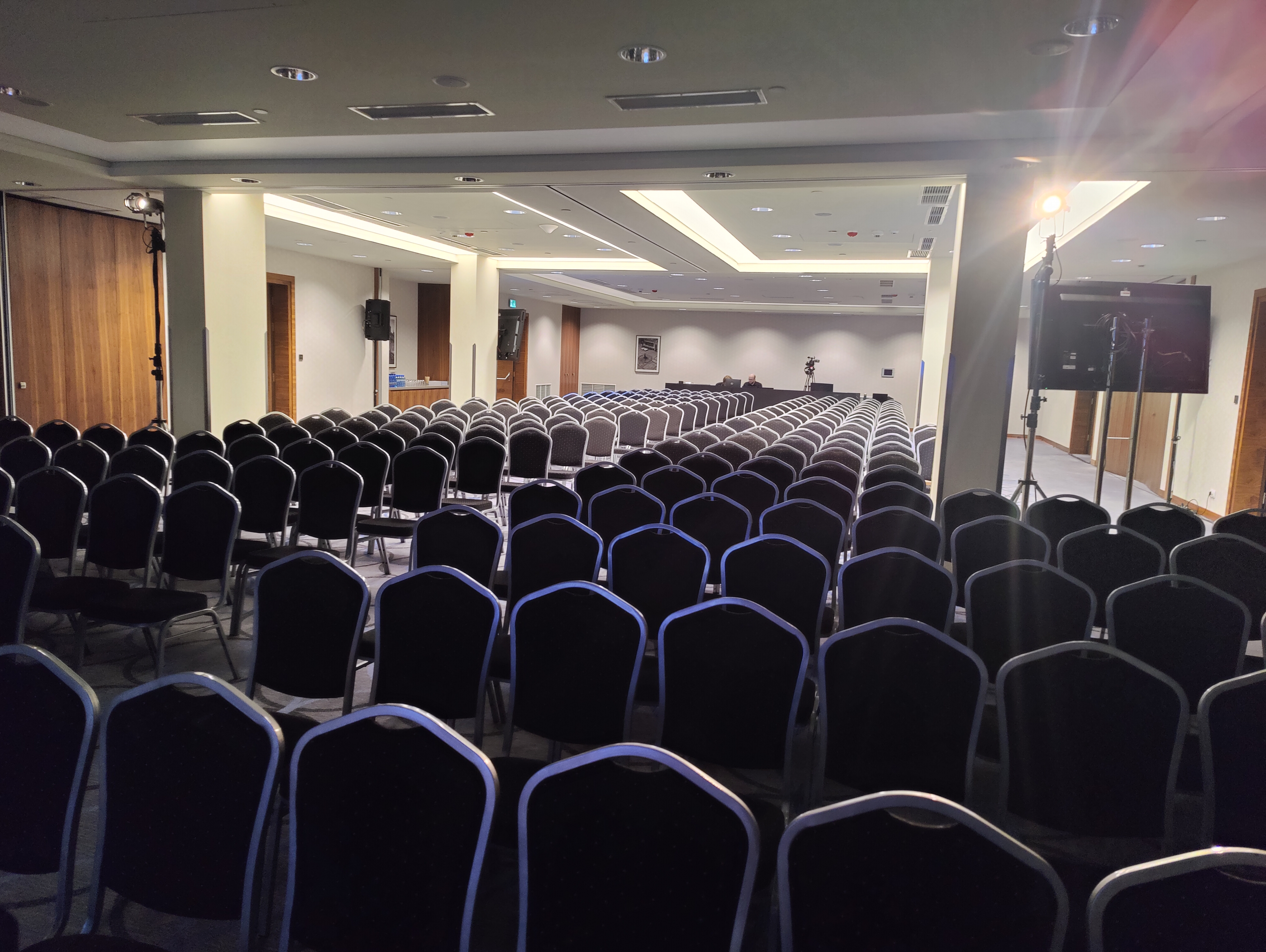
I walked into the room where I would give my first conference talk just to get a feel for it. Seeing all those empty chairs, my nerves hit me like a ton of bricks. Over the next days those seats would be filled with people listening to talks – and one of those talks would be mine.
I was definitely far out of my comfort zone.
So how did I get there? Last year I took the plunge into public speaking. It was exciting, it was fun, and it snowballed in ways I never imagined.
I still have tons to learn, but if you’ve ever secretly dreamed of taking the stage yourself, read on. I’ll walk you through the lessons I learned, why I think it was worth every ounce of effort, and how you can get started, too.
The Spark
I’m always in awe of speakers who captivate an audience effortlessly. One day, I want to be able to do that, too.
I’ve given plenty of workshops for small groups (up to 20 people) and feel fairly comfortable but standing in front of a hundred eyes is a whole different ball game.
One of my favorite quotes is:
Anxiety and excitement are the same feeling. It’s the mindset that’s different.
So when the opportunity presented itself, I took it.
In 2024 two colleagues and I attended ElixirConf EU in Lisbon. The talks were inspiring, especially the keynotes impressed me with their skill in content and style. But enough also felt within reach, so we thought, “Hey, that could be us, too.”
When the call for talks for ElixirConf EU 2025 opened, we decided to apply. Coordinating three people on one submission was too much, so I chose a solo topic.
My Preparation Journey
Finding a Topic
I needed a subject that would interest Elixir developers. Working with legacy code in production is, in my opinion, one of the most challenging engineering problems - it’s an intricate puzzle where you untangle strings bit by bit. At work we’ve been modernising parts of our legacy codebase and learned a lot along the way.
A recent talk I gave at my local software‑engineering meetup about legacy code resonated strongly with the audience, so I settled on that as my conference topic.
Shaping the Proposal
ElixirConf uses Sessionize for submissions, so I created a profile, added a short bio and then worked through the given questions.
First was the audience, who goes to ElixirConf and who do I want to address? Attendees range from hobbyists to veterans and even a few community VIPs. I decided to aim my talk at:
Seasoned Developers who are curious how elixir can be integrated in existing non-elixir software products.
What should they take away? I wanted them to feel empowered to tackle their own legacy code and to see how “sneaking” Elixir into production can happen without a massive rewrite all at once. So I wrote that:
Key takeaways: How you can integrate technology transformations like moving to elixir and functional programming into your business as usual and how to approach some of the challenges.
Next, I decided on a rough outline that would take listeners from “Hello, I’m Anita” to said takeaways. Putting this into continuous text and adding a few punchy statements, the proposal boiled down to this:
Turn Old Into New: Moving To Elixir Feature By Feature It’s 2022 and our software feels like 1999. Our developer pace is fine but the habitat is crumbling, the technology is outdated. So in January 2023, we took the plunge and started building the new town over in Elixir Land.
In this talk, we share our approach to the technology shift and how we integrate this long term goal into our business as usual where we focus on modern software engineering with small incremental steps. We’ll take a look at the challenges we have faced and are still facing, some of which are: communicating between old and new system, shifting to functional programming, making existing data usable in Ecto, building bridges and shifting traffic and last but not least doing this all without the user noticing. We’ll also take a look at a real life feature that went from ugly duckling to shiny new with the help of the strangler fig pattern.
Finally, all that was left was to hit “Submit”. After taking a few deep breaths and being very nervous about going out into public like that, I hit the button.
In January I received the acceptance email 🎉
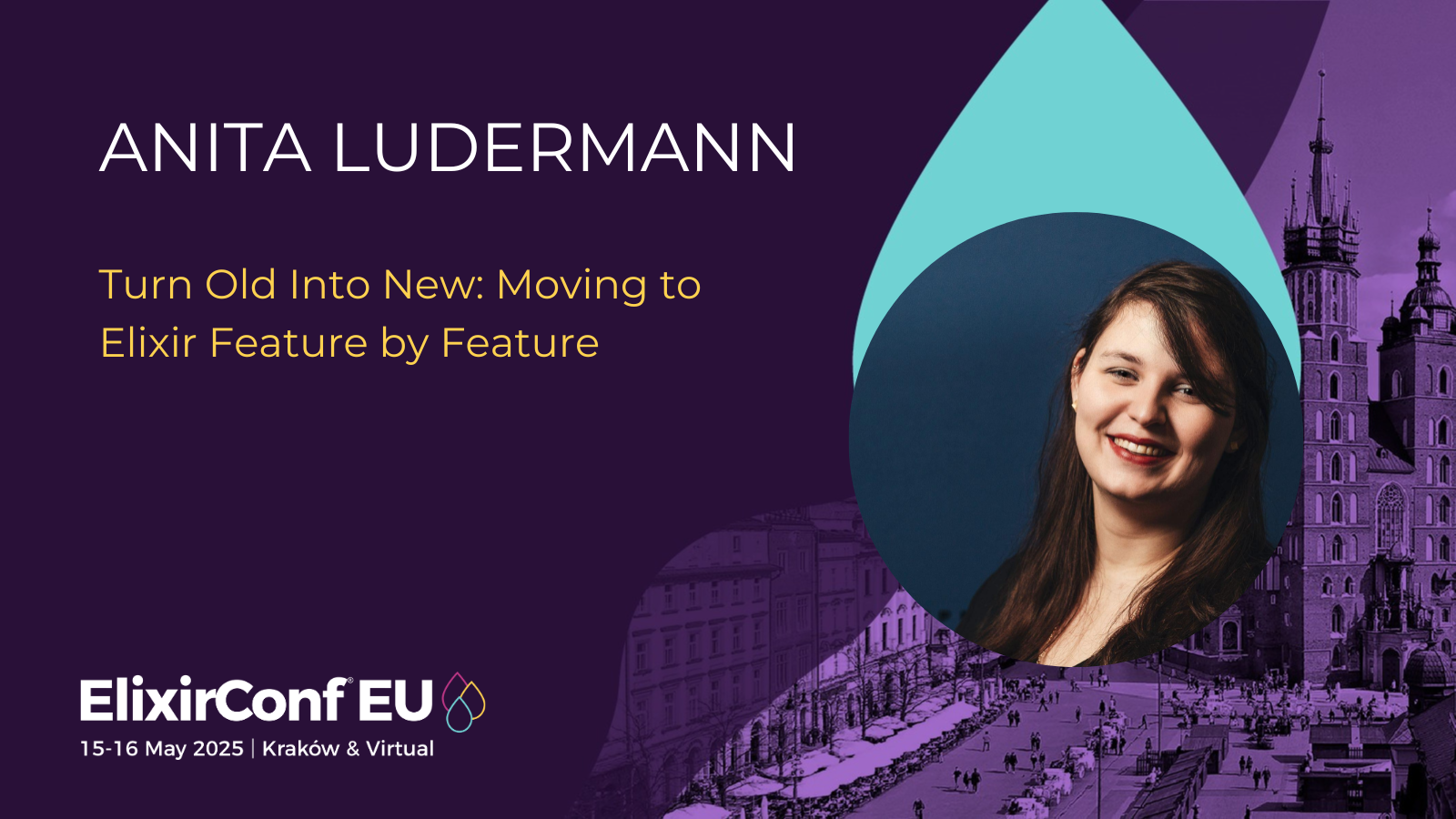
I rode that high for a few weeks and felt encouraged to look for other opportunities. I discovered the Goatmire Elixir Conference in Sweden (September 2025) which had a really cool vibe and feeling I had nothing to lose, I submitted the same proposal there as well. I got accepted for this one as well.
Lesson learned: Sometimes you just have to go for it. It’s surprisingly easy to get a foot into the door, especially in a supportive community like the one around Elixir.
Crafting the Talk
This phase took the longest. We held a small local conference a month before ElixirConf EU which I used as my dress rehearsal. I fell into “I need to finish my slides” mode for weeks but got stuck in my head, not really being happy with them but also not knowing how to make it better and having too many options of what I wanted to put in. In the end, I finished the first version the night before the talk, and struggled to maintain a clear narrative thread. If I could do it again, I’d gather feedback way earlier. Do the same!
Lesson learned: I tend to chase perfection on the first try, which stalls progress. Treating the first draft as a starting point and actively seeking early feedback would have smoothed the process.
The talk itself was okayish. Nerves flared, especially because my colleagues could challenge me in ways others couldn’t, knowing all the internal details. As you might have noticed by now, I feel vulnerable sharing my work in public without reassurance how people will react to it. Definitely not my comfort zone - but that’s also were I get better, so fingers crossed and let’s go.
The first round of feedback validated that my “red thread” was weak, so I re‑worked several sections. My colleagues’ input proved invaluable in that (and they were very kind and constructive with their feedback, so all the worry was for nothing ;) )
A surprisingly helpful sounding board was my husband, who offered an outside perspective and asked probing questions that highlighted gaps.
By the end of several revision cycle I felt confident in both slides and delivery.
If you are interested more in the process of cutting all that I would’ve liked to share down to the talk that it ended up being, feel free to reach out. I might do a writeup of that at some point, too.
At the Conference
May arrived, and we headed to Krakow. My teammates joined, turning the trip into a mini‑team‑building event. The night before the conference I attended the speaker dinner, where I struck up conversations with several other speakers, some newbies like me, some veterans.
The next day, I also met Lars, the organiser of Goatmire. He was incredibly kind, introduced me to a few people, and even gifted me an Elixir‑themed shirt (yes, he also sells T‑shirts as a hobby 😉).
The Talk
The technical side was straightforward. I arrived early, connected my laptop to the projector, and performed a quick soundcheck. I also emailed a copy of my slides to the organisers and saved a PDF on my phone - just in case PowerPoint decided to strike (it didn’t).
Right before the presentation, I was sooo nervous. Not eating much for lunch out of fear I’d vomit during the talk and super intimidated by all the chairs filling with people.
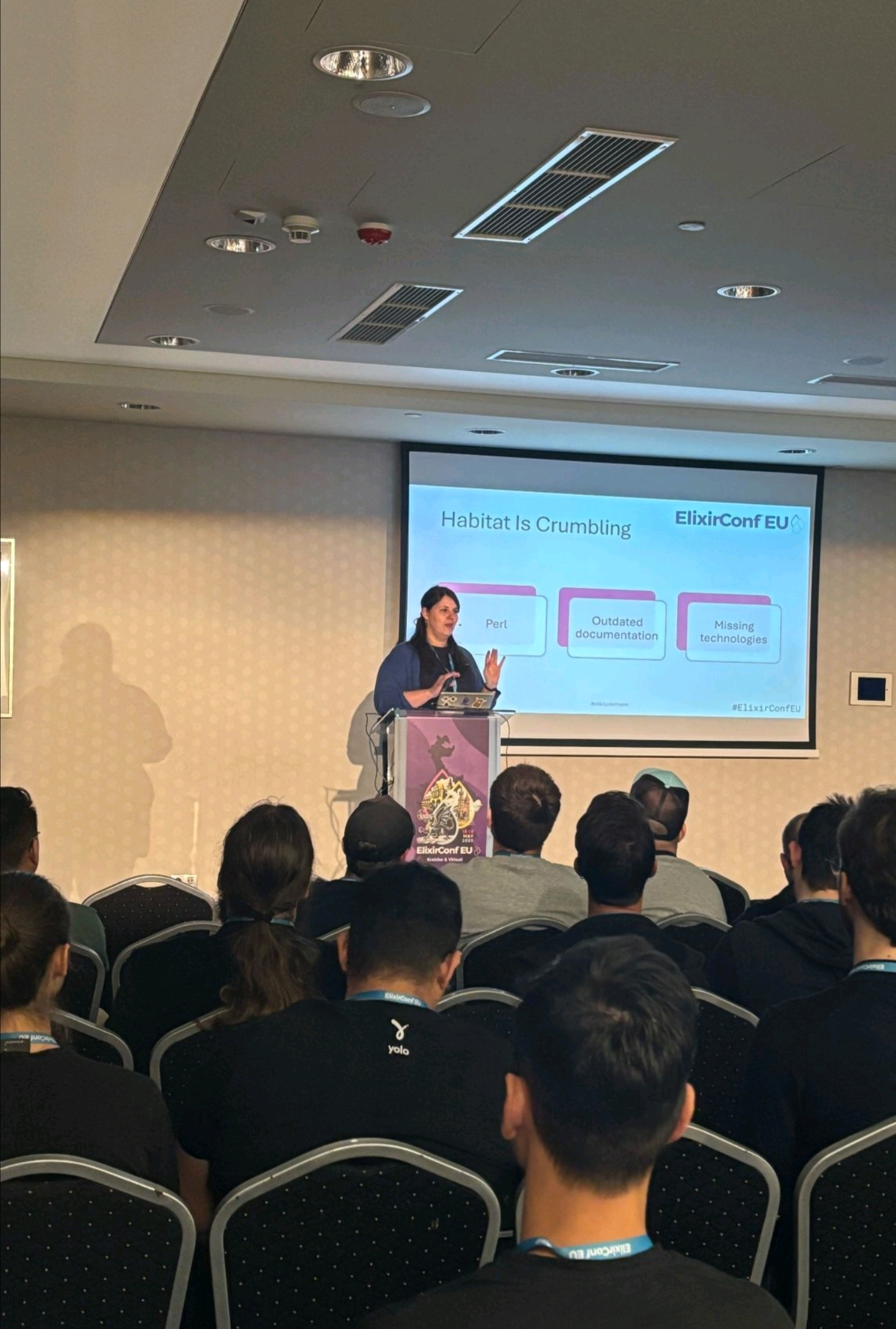
During the presentation I slipped into “just do it” mode. I don’t remember what exactly I said in detail but once I got going, I felt fine and focused on my flow. Mid‑talk I briefly forgot my English and defaulted to German, but I recovered quickly and finished in time and feeling confident in my message. The short Q&A that followed went well, and I stepped offstage feeling relieved and exhilarated.
You can watch my talk here, btw
After the Talk
Immediately afterward I was happy, exhausted, and a little overwhelmed. I stepped outside for fresh air, ran into Lars again, and relaxed with a few new acquaintances.
Several attendees approached me later, sharing their own legacy‑code struggles and praising the talk. Two people invited me to speak at their meet‑ups - a fantastic surprise! I also posted the talk on LinkedIn, which generated additional speaking invitations. By the end of 2025 I’d spoken at two conferences and two meet‑ups with the prospect of doing more but couldn’t fit everything into my schedule.
Going to Goatmire alone gave me space to mingle with the community in the evenings. The crowd was warm, the conversations enriching, and I left feeling like a genuine part of the Elixir ecosystem.
What’s Next
Last year taught me that getting into public speaking is surprisingly accessible, and it’s perfectly fine not to be amazing from the start. Many conferences actively welcome newcomers, offering a supportive environment to practice and grow. Authenticity matters more than polish, it helps you connect with the audience on a human level.
Because I’m currently enjoying the adventures of parenthood, I won’t be on stage at conferences this year. But I am sure, I will be back and then my next goals are:
- Improve delivery and speak more fluidly in English in these situations
- Hone techniques for capturing and retaining audience attention.
Another cool thing happened: I’ve been invited to join the program committee for Goatmire 2026, so I’ll be working behind the scenes. I can’t wait to see how a conference runs from the other side.
If you’re thinking about trying public speaking, feel free to reach out. Submit a proposal to Goatmire, or share your own experiences - every story helps the community grow.
Remember: Even the most seasoned speaker started somewhere.
Checklist for Your Own Talk
- Think about topics you’d be excited to talk about.
- Check for Calls for Talks in your field.
- Research the conference’s typical audience.
- Select a topic and tailor it to that audience. Keep it simple: 1 core message, 2‑3 key points.
- Start building your deck early.
- Be better than me: gather feedback early and frequently, treat the first draft as a starting point
- Practice aloud: at a local meetup, with friends, family, colleagues, or by recording yourself.
- Have backup plans for technical difficulties (extra copies, PDFs, USB drive).
- Be yourself and have fun! Authenticity is far more interesting than perfection.